If you’re searching how to become a sworn translator, you’re probably aiming for one of two outcomes:
You want the legal status to produce translations accepted by courts, ministries, and public authorities in a specific country.
You need a translation that will be accepted, and you’re trying to figure out what “sworn” really means where you live (or where your documents are going).
Here’s the key: “Sworn translator” is not a universal job title. It’s a country-specific legal designation. The route to become one in Belgium is not the same as Spain—and the UK doesn’t run a “sworn translator” system in the same way many EU countries do.
To make this simple (and actionable), this guide covers:
What “sworn” means vs “certified” vs “notarised” vs “apostilled”
How to become sworn (or the closest equivalent) in the UK, Belgium, and Spain
A practical plan you can follow no matter your country
Common reasons translations get rejected (and how to prevent it)
What to do if your documents must be sworn for a foreign authority
A sworn translator is typically a translator who has been officially authorised by a court or government body to produce translations with legal validity in that country. Their translations usually include:
A required certification formula (wording)
An official stamp or seal (sometimes a registered number)
A signature (and sometimes a registered signature on file)
In many countries, the “sworn” status is linked to a public register. Authorities can verify that the translator is officially appointed.
Sworn vs certified vs notarised vs apostilled (quick clarity)
Sworn translation: Produced by an officially appointed translator in countries that require sworn status (common in parts of Europe).
Certified translation (UK): A translation accompanied by a signed statement confirming accuracy and providing the translator/company details.
Notarised translation: A notary verifies the identity/signature of the translator (or the declaration), adding a notarial certificate.
Apostille: A legalisation certificate that authenticates a public signature/seal for international use (often used alongside notarisation, depending on destination).
Belgian courts, ministries, municipalities, public authorities
Spain
Yes (Traductor/Intérprete Jurado system)
Meet eligibility → pass official exam route (and/or recognised pathways) → use official formula + seal
Spanish public authorities, notaries, courts, consulates
The universal roadmap (works for any country)
No matter where you plan to qualify, sworn/certified work has the same foundations. If you follow this roadmap, you’ll be ready for the country-specific step when it’s time.
1) Choose your target jurisdiction first (this avoids wasted years)
The biggest mistake people make when asking how to become sworn translator is assuming the title “travels” neatly across borders.
Before you start:
Where will most of your clients be—UK, Belgium, Spain, or elsewhere?
Which authorities will accept your translations?
Do you need “sworn” status in the destination country, or will UK-style certification be enough?
If your documents are going abroad and you’re not sure what the receiving authority requires, send the destination country + authority name and we’ll confirm the correct format before you pay for anything:Contact Us.
2) Build language mastery plus specialist competence
Sworn work isn’t “general translation with a stamp.” It’s often high-risk, high-precision work:
4) Create a quality system (so you can scale without mistakes)
Sworn/certified translation work rewards reliability.
A simple, professional workflow:
First pass translation
Terminology consistency check
Second pass review against the source
Formatting and names/numbers verification
Final certification package assembly
If you want a benchmark for a structured quality approach, seeOur Quality Promise.
How to become a sworn translator in the UK (and what “sworn” means here)
People search how to become a sworn translator UK (or how to become sworn translator in UK) because “sworn” is a common term internationally. But the UK generally works differently:
The UK model: certified translations (not a court-sworn register)
For most UK official uses, authorities typically expect a certified translation—a translation accompanied by a signed statement confirming it’s accurate and giving traceable details for verification.
In practice, your “UK path” looks like this:
Step 1: Become a professional translator (skills + credibility)
Typical routes include:
A degree in translation/linguistics or equivalent professional training
Proven professional competence in your language pair
Specialist legal/document translation competence
Step 2: Build professional credibility signals
To win trust (and reduce rejections), you need credibility that a caseworker, registrar, or university admin can recognise quickly:
Professional membership (where relevant)
A consistent certification statement format
A business identity that can be independently verified (website, contact details)
Step 3: Master the UK-certified translation pack (your “acceptance template”)
A solid UK-certified translation pack usually includes:
The translation (complete, faithful formatting)
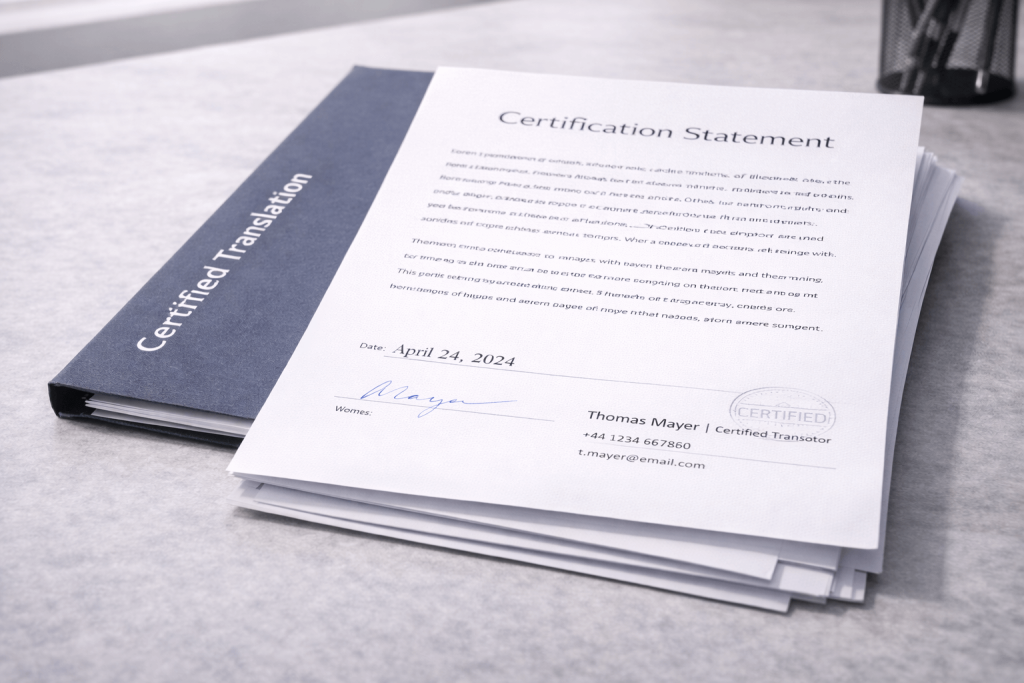
A signed statement of accuracy
Date, name, signature
Contact details
Clear identification of language pair
Copy/paste example wording (UK-style certification statement):
I certify that this is a true and accurate translation of the original document presented to me in [source language] into [target language]. Name: [Full name] Signature: ____________________ Date: [DD Month YYYY] Contact details: [Email, phone, address/website]
If you need your document accepted quickly, don’t gamble on templates from forums. Use a service that already formats correctly for UK institutions:Certified Translation Services. Upload your file and you’ll get a clear quote and turnaround without back-and-forth.
Step 4: Know when the UK is not enough
If a foreign authority explicitly requires a sworn translator (Spain, Belgium, France, Germany, Poland and others), a UK-certified translation may be rejected.
In those cases, you need a sworn translation produced in the required jurisdiction—which is exactly what we arrange here:Sworn Translation Services.
How to become a sworn translator in Belgium
If you’re searching how to become a sworn translator in Belgium, you’re entering a structured system where sworn translators/interpreters are tied to:
A national register
Formal conditions of access
An oath and defined rules for sworn translations
Step 1: Confirm you meet the access conditions
Belgium’s sworn translator framework is not “apply and print a stamp.” Expect requirements such as:
Strong proof of language competence
Specific administrative conditions (including good standing)
A legal knowledge component (often via required training/certification)
Step 2: Apply through the official process and documentation
You’ll typically need to compile a file that proves:
Identity and eligibility
Language competence credentials (and/or professional evidence)
Any required legal knowledge training/certificate
Administrative declarations requested by the system
Step 3: Oath + registration (your “sworn” status starts here)
After approval, sworn status is linked to:
Registration details in the official system
A recorded identity, often with a unique identifier
Being bound by professional obligations (confidentiality, integrity, availability rules where applicable)
Belgium can be strict about the sworn translation package. Common elements include:
Clear linkage between the translation and the source document
Required wording/mentions
Signature and required identifiers
Page management and attachments in the way the system expects
Practical tip: Belgium is a multilingual country with regional realities (French/Dutch/German). Even if the register is national, your working language(s) and administrative context matter. Don’t choose your path based only on what you “heard” from another translator—verify the requirements for your profile and language direction.
If you need Belgian sworn translations for official use (or you’re submitting UK documents into Belgium), you can avoid trial-and-error by using a sworn translator in the correct jurisdiction:Sworn Translation Services.
How to become a sworn translator in Spain (Traductor Jurado)
If you’re searching how to become a sworn translator in Spain, you’re referring to Spain’s official sworn translator pathway (often described as traductor jurado).
Spain’s system is tied to:
Eligibility requirements
Official assessment/exam routes (depending on the current regulatory framework and calls)
Official certification formula and seal model
Step 1: Check eligibility (before you invest time)
Spain’s eligibility criteria are formal. In most cases, you’ll need:
Adult legal capacity
Nationality/eligibility conditions (commonly EU/EEA-related under the relevant rules)
An appropriate higher education degree (or recognised equivalent where required)
Step 2: Follow the official route for appointment
Spain’s sworn translator appointment is not issued by private bodies. The process is tied to the public administration framework and official regulations, which can evolve over time.
What doesn’t change:
You must follow the official call/process for your language
Your title is tied to authorised language(s)
Your sworn translation output must follow prescribed certification content and identification
Step 3: Learn the sworn translation formula and seal expectations
Spanish sworn translations are typically expected to include:
A defined certification statement (fidelity/exactness)
The translator’s identification and authorised language(s)
Signature (and in many cases, the correct stamp/seal approach)
Often, a copy/attachment approach that allows authenticity checks
High-value tip (Spain): Don’t train “only translation.” Train exam performance:
No-dictionary and dictionary-based translations (as applicable)
Speed + precision under controlled conditions
Legal/economic terminology and Spanish administrative language
Interpreting competence if required in your route
Step 4: Get listed and stay compliant
Once authorised, your professional reality includes:
Keeping your details updated
Using the certification wording correctly
Producing sworn translations that match formal expectations (especially for notarial/court use)
If you need a sworn translation for Spain quickly—especially for legal, academic, immigration, or notarial purposes—skip guesswork and send the document for review. We’ll confirm the correct format and arrange the sworn translator in the required jurisdiction:Sworn Translation Services.
“And more”: how sworn translator systems usually work in other countries
Many European systems share a similar pattern even when the exact rules differ:
Common models you’ll see
Court appointment model: Sworn translators are approved by a court and take an oath.
Ministry model: A central ministry runs the appointment/exam and maintains the register.
Regional model: Authorisation is handled at a regional/state level with local registers.
Examples of what the title might be called
France: traducteur assermenté (often tied to courts)
Germany: terms vary by state (often court-authorised/sworn translators)
Poland: tłumacz przysięgły
Netherlands: sworn/registered translators in official registers
If your goal is to work internationally, choose one “home” system first (where you can become officially appointed) and then build cross-border workflows:
Partner with sworn translators in other jurisdictions
Build an internal QA checklist per destination authority
Always confirm requirements for the receiving country (not your home country)
How to verify a sworn translator (and avoid rejection)
Whether you’re becoming sworn or hiring one, verification is where trust is won.
A safe verification checklist:
Is the translator listed on the official register/public search?
Does the translation include the required certification formula?
Is the stamp/seal consistent with the official model used in that country?
Are pages clearly linked to the source document and properly paginated?
Are dates, names, places, and document numbers identical to the source?
If you’re a client: the fastest way to avoid rejection is to send the destination authority name (e.g., “Spanish notary”, “Belgian commune”, “UKVI”) with your file. We’ll confirm what format is required before translation begins:Contact Us.
Common reasons sworn/certified translations get rejected
Here are the top issues we see across jurisdictions:
Wrong type of translation for the destination A UK-certified translation is submitted where a sworn translation is required (or vice versa).
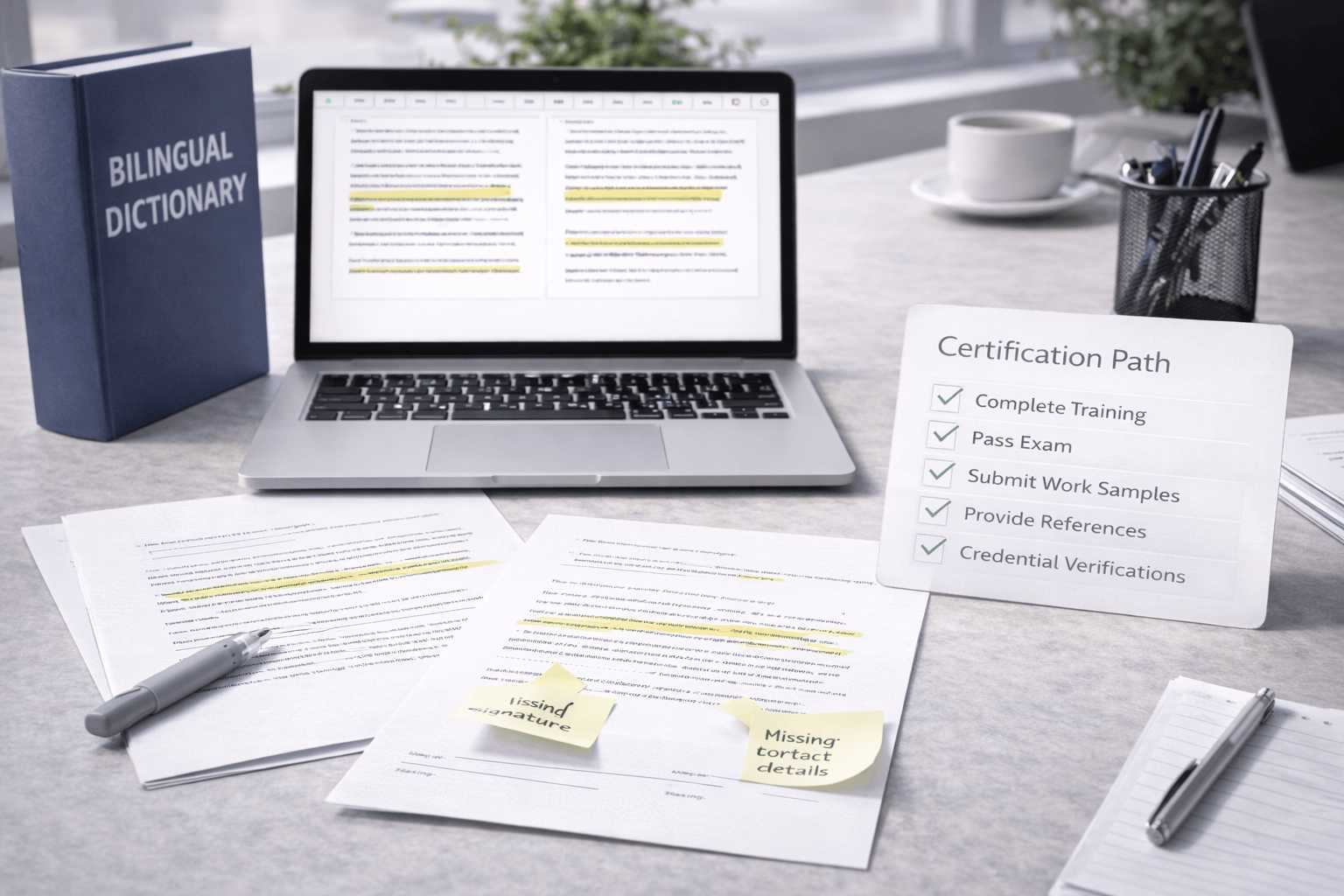
Missing certification elements Missing signature, date, contact details, registration number, or required wording.
Create a QA checklist for numbers, names, dates, places
Week 3: Train for accuracy under constraints
Translate official documents with strict formatting
Time yourself (sworn work is often time-sensitive)
Review against source documents line-by-line
Week 4: Create proof of competence
Build a small portfolio (sanitised samples)
Create a professional presence (traceable contact details, website)
Start networking with agencies and sworn translators in other jurisdictions
If you want real-world exposure quickly, joining a vetted translation network can accelerate learning—especially if your goal is official-document work:Join Our Network (send a message titled “Translator Network” with your languages and experience).
FAQ
1) How to become a sworn translator UK?
The UK generally does not operate a court-sworn translator register like many EU countries. The closest equivalent for official purposes is becoming a qualified professional translator and producing certified translations in the format UK institutions require. If a foreign authority requires “sworn,” you usually need a sworn translator in that specific country.
2) How to become a sworn translator in Belgium?
Belgium uses a formal system tied to an official register and an oath-based appointment. You’ll typically need to meet eligibility and competence requirements, complete any required legal knowledge component, apply through the official procedure, and follow the sworn translation rules once registered.
3) How to become a sworn translator in Spain?
Spain’s sworn translator system is formal and regulated. You must meet eligibility conditions and follow the official appointment route for your language. Once authorised, sworn translations must use prescribed certification wording and identification elements.
4) Is a certified translation the same as a sworn translation?
Not always. A certified translation (common in the UK) is usually a professional translation with a signed accuracy statement. A sworn translation is issued by a translator officially authorised by a court or government body in jurisdictions that require sworn status.
5) Can I use a sworn translation from Spain in the UK?
Sometimes—depending on the UK institution and the purpose. Many UK bodies focus on whether the translation is complete, accurate, and verifiable. However, if you’re submitting to a specific authority, always confirm their acceptance rules before relying on a format from another country.
6) Do I need notarisation or an apostille as well?
It depends on the destination authority. Some require notarisation of the translator’s declaration and/or an apostille to legalise the notarial certificate for international use. If you share your destination country and authority, we can confirm the correct route before you pay for extras.
If you’ve Googled “how to become a certified translator in Canada,” you’ve probably noticed something confusing right away: the word “certified” doesn’t mean the same thing everywhere.
In Canada, it usually means a protected professional title granted through a provincial association pathway (often involving peer assessment). In the US, people often mean ATA-certified translator (translation) or state/federal court interpreter (interpreting). In Germany, “certified” frequently means court-sworn/appointed. In the UK, “certified translation” is typically about how a translation is presented for official use rather than a government-issued “translator licence.”
This guide clears the fog with practical steps, country-by-country routes, and the exact checkpoints you’ll need—especially if you’re targeting Canada first.
Certified, sworn, court-approved: a quick glossary (so you don’t take the wrong path)
Certified translator (Canada – professional title): A translator recognized by peers through a provincial certification route (commonly exam or dossier-based), allowing you to use “Certified Translator” in that jurisdiction.
ATA-certified translator (US – credential): A translation credential earned by passing the ATA certification exam in a specific language pair. It’s widely respected in the US market.
Court-certified interpreter (US – interpreting credential): A credential for spoken interpreting in courts. This is not translation, and requirements vary by state/federal system.
Sworn / court-appointed translator (many European countries): A translator who is officially authorized/appointed (often by a court) to produce translations accepted as “official” without additional steps.
Certified translation (UK/Ireland/NZ – a document format): A translation delivered with a signed statement, date, contact details, and sometimes stamping—so authorities can trust the translation as a faithful rendition.
Start here: the “right route” decision tree (90 seconds)
Choose the route that matches your goal:
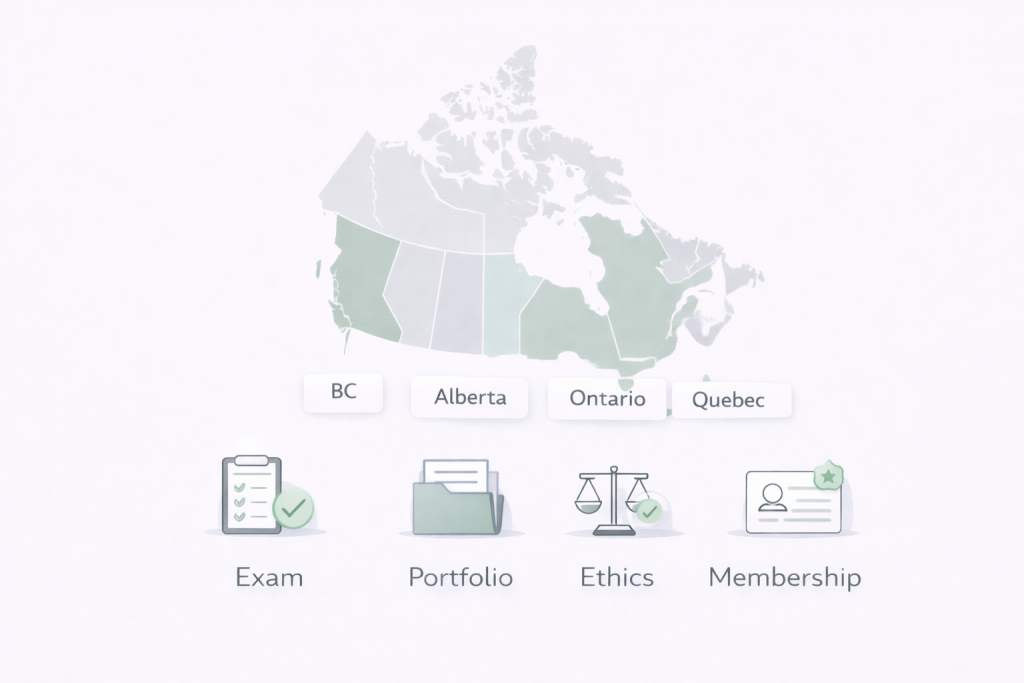
You want the protected title “Certified Translator” in Canada → Follow the provincial association route (exam or dossier). Start with Ontario/Alberta/BC/Quebec rules below.
You want US credibility as a translator (not an interpreter) → Consider ATA certification + strong specialization portfolio.
You want to work in courts (spoken language) → You likely need court interpreter certification (state or federal).
You need official translations accepted abroad (Germany/France/Spain/Italy, etc.) → You’ll need a sworn/court-appointed translator (or a service that can provide one).
You’re not sure yet and just want paid work fast → Build a portfolio, pick a niche, work with agencies, and then pursue credentials once you know your best language pair + market.
Canada: how to become a certified translator (the step-by-step that actually works)
In Canada, certification is provincial/territorial. That means your pathway starts with the association that governs or manages professional recognition in the province where you plan to practise or present yourself as certified.
Step 1: Pick your province (because the rules are not identical)
Ask yourself:
Where will most of your clients be?
Where do you intend to market yourself as “certified”?
Do you plan to work with government, courts, or regulated institutions?
If you’re unsure, start where you live (or where you’ll build the most client relationships) and expand later through recognized mobility/affiliation pathways.
Step 2: Confirm your language direction and specialization
Most serious certification routes assume you can produce publication-quality writing in your target language, not just “good bilingual ability.”
Pick:
Language pair and direction (e.g., French → English, Arabic → English, English → Spanish)
You’ll progress faster if you choose one strong direction and one primary domain.
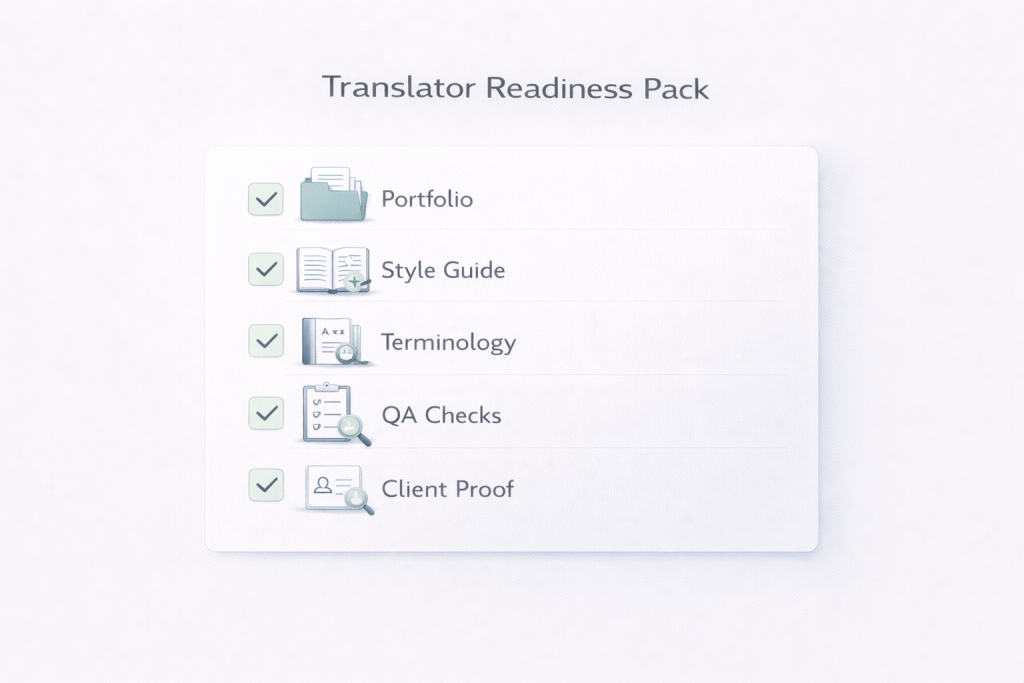
Step 3: Build your “proof of readiness” pack (before you apply anywhere)
This is the single biggest difference between applicants who succeed quickly and those who stall.
Prepare:
A translation-focused CV (not a general résumé)
6–10 portfolio samples (with brief context, not confidential client details)
A list of reference materials you actually use (dictionaries, corpora, style guides)
A short summary of your domain expertise (e.g., legal/immigration document types you know)
Step 4: Join the provincial association pathway
Most provinces run certification through a professional body that may require:
Membership as a student/associate/candidate category first
Proof of education, experience, or both
Ethics or admission requirements
Once you’re inside the pathway, you’ll usually qualify for one of two routes:
Certification by exam (common; peer-assessed exam)
Certification on dossier / portfolio (available in some provinces for experienced translators who can demonstrate work at a high level)
Step 5: Choose your certification route (exam vs dossier) based on your profile
Choose the exam route if:
You have strong writing skills and can perform under time constraints
You want a clearer “pass/fail” milestone
You’re earlier in your career but ready to prove competence
Choose dossier/portfolio route if:
You have years of real professional work already
You can provide substantial, high-quality evidence
You want an evaluation based on consistent performance over time
Step 6: Train like it’s a professional performance, not a language test
Certification assessment typically rewards:
Accuracy + completeness
Idiomatic target-language writing
Terminology consistency
Professional judgement (register, tone, formatting)
Error avoidance (names, dates, numbers, official terminology)
A smart prep plan:
Do timed translations weekly
Have a qualified reviewer mark your work (errors categorized)
Build a personal error log (your recurring mistakes are your syllabus)
Step 7: Maintain professional standing once certified
Certification is not “set and forget.” Expect:
Ongoing professional conduct obligations
Continuing professional development expectations
Clear rules on how you present your credential publicly
How to become a certified translator in Ontario (ATIO)
If you’re searching how to become a certified translator in Ontario, your first checkpoint is understanding that Ontario’s pathway is managed through the province’s professional association route.
Practical steps:
Apply for the appropriate membership category aligned with certification candidacy
Select your direction (e.g., French → English) and confirm you can write at a professional level in the target language
Choose your route: certification exam or dossier-based evaluation (where applicable)
Prepare with real-world texts (legal/administrative style often appears)
Pass the assessment and follow the professional obligations once recognized
A reality check: people often underestimate how much the assessment is about excellent target-language writing, not just bilingual comprehension.
How to become a certified translator in Alberta (ATIA)
If you’re searching how to become a certified translator in Alberta, expect a structured route with prerequisite checks and professional expectations.
Practical steps:
Enter the association pathway and complete any required prerequisite exams (ethics/proficiency requirements may apply)
Build a portfolio that demonstrates real professional competence
Choose exam or dossier-based certification, depending on eligibility
Prepare for assessment with timed practice and professional review
Once recognized, stay compliant with professional conduct expectations
If your strongest language is not English, invest early in target-language writing polish—this is where many candidates lose marks.
How to become a certified translator in British Columbia (STIBC)
If you’re searching how to become a certified translator in BC, the process typically involves:
Membership pathway entry
Meeting eligibility requirements
Sitting a recognized certification exam route (often administered through provincial structures)
Maintaining good standing and professional conduct
BC is competitive—your portfolio and professional positioning matter as much as your credential.
How to become a certified translator in Quebec (OTTIAQ)
If you’re searching how to become a certified translator in Quebec, you’ll find Quebec has its own structure and terminology, and degree equivalency may play a larger role.
Practical steps:
Confirm whether your degree/training is recognized (or submit for equivalency assessment)
Apply through the professional order’s pathway
Provide the required documentation and professional evidence
Complete the necessary evaluation route for the designation
Maintain professional standing and obligations
If you trained outside Canada, start early—document evaluation can add time.
Canada “fast track” strategy (for people who want results in 6–12 months)
If you want the most efficient path toward certification readiness, focus on three levers:
1) Pick one language direction and one domain
A strong French→English legal translator will outpace a “generalist in five language directions” almost every time.
2) Build a portfolio that looks like real client work
Include:
Vital records translations (birth/marriage certificates)
Completing the credentialing steps set by the state body
For written translation, again: ATA + portfolio is the most portable.
How to become a certified translator in Michigan
Michigan offers a structured court interpreter certification/testing route. If your goal is court work, follow that system.
If your goal is translation, don’t accidentally train for interpreting exams—choose translation-specific development instead.
How to become a certified translator in NY
New York’s court interpreter process includes written exam requirements and additional steps depending on the role/type of appointment.
If your market is legal translation in New York (documents, contracts, immigration), ATA + strong legal portfolio often matters more than an interpreting credential.
How to become a certified translator in Texas
Texas uses a licensing framework for court interpreters with written and oral exams, plus administrative requirements.
For translators, build credentials and proof around translation output quality and domain expertise.
United Kingdom: how to become certified translator UK (and what “sworn translator UK” really means)
Many people search:
how to become certified translator UK
how to become a sworn translator UK
how to become sworn translator in UK
Here’s the key point: the UK generally doesn’t use a “sworn translator” system in the same way Germany, France, Spain, or Italy do. For most UK official purposes, what matters is that the translation is properly certified as a document and produced by a competent professional.
A practical UK pathway (for professional credibility)
Build formal training (degree, postgraduate study, or equivalent professional development)
Consider respected professional exams such as high-level translation diplomas
Join a professional body at the right membership level as your experience grows
Build a portfolio focused on official document types and one or two domains
Learn the correct UK-format certification statement for official submissions
It matters when your translation is destined for a country that requires sworn/court-appointed translators. In that case, you don’t “become sworn in the UK”—you need the translation completed by an officially appointed translator in the destination country.
Germany: how to become a certified translator in Germany (sworn/court-appointed route)
If you’re searching how to become a certified translator in Germany, you’re usually referring to the pathway to become publicly appointed/authorized and sworn (the translator whose work is accepted as official for authorities, courts, and notaries).
A practical high-level route:
Achieve verified professional competence (education, exams, recognized qualifications)
Apply to the competent authority/court in the German federal state where you will be appointed
Provide required documents (qualifications, language proof, clean record where required)
Complete the formal appointment/sworn process
Follow professional obligations and renewal rules as applicable
Germany is a “details matter” jurisdiction—requirements and responsible authorities can differ by federal state even under a more uniform framework. Plan for documentation, formalities, and precise compliance.
Ireland: how to become a certified translator in Ireland (and what official bodies usually expect)
Ireland commonly uses “certified translation” in the sense of a translation accompanied by a signed certification statement suitable for official use.
If your goal is to become professionally recognized:
Build formal education or demonstrate competence through professional assessment routes
Join a professional association pathway where relevant
If you work in legal/official contexts, follow the accepted certification format carefully
Build a portfolio around immigration, legal, and academic document categories
If your goal is certified translations for immigration/official submission, the “who can certify” rules are practical and specific—always follow the recipient authority’s instructions.
India: how to become a certified translator in India (what “certified” usually means)
India typically does not operate with one single, nationwide “certified translator licence” for all purposes. In many contexts, “certified translation” refers to a translation that is:
Produced by a competent translator/agency
Accompanied by a signed declaration/certification statement
Sometimes supported by notarization or affidavit depending on use case (embassy, visa, court, education)
Add formal training (translation studies, linguistics, legal/medical specialization)
Develop a portfolio with official document types (certificates, affidavits, legal statements)
Work with reputable agencies to accumulate verifiable experience
Learn the formatting and certification requirements used by your target recipients (embassies, universities, courts)
In India, credibility is often built through specialization + consistent quality + proper certification format rather than a single national credential.
New Zealand: how to become a certified translator in New Zealand (practical recognition route)
In New Zealand, professional recognition commonly centers around:
Formal training pathways
Professional association eligibility (where membership requires strict criteria)
Government or institutional testing routes for certain roles
A practical plan:
Obtain recognized training (or have overseas qualifications assessed)
Build experience with review and quality control
Align your professional standing to the roles you want (freelance, agency, government work)
Learn the certified translation format expected by the receiving authority
If your goal is official document translation work, make sure your process includes a proper certification statement, secure handling, and consistent formatting.
“Europe and beyond”: how to research any country’s certification system in 10 minutes
When you’re expanding internationally, don’t guess. Use this quick checklist:
1) Is the profession regulated?
Search: “official translator appointment” + country name If yes, the country likely has a sworn/court-appointed system.
2) Who is the end user?
Court?
Immigration authority?
University?
Notary? Each may have different acceptance standards.
Process discipline (terminology, QA checks, formatting)
Professional presentation (clear emails, deadlines, confidentiality)
The “professional QA routine” used by top translators
Before delivery:
Numbers, dates, names checked twice
Terminology list confirmed and consistent
Formatting matched to the source document
Final read-through in the target language only (to catch awkward phrasing)
If you need certified translations while you build your career
Many people pursuing certification also need certified translations for immigration, study, marriage, legal filings, or overseas submissions. When acceptance matters, the safest move is to use a service that delivers the correct format from day one.
Client note we hear often: “We were worried about rejection. The certified format and clear certificate statement made it straightforward.”
FAQs
1) How do I become a certified translator in Canada without a translation degree?
It depends on the province and route. Some pathways allow experienced translators to qualify through portfolio/dossier evaluation or by meeting eligibility requirements before attempting certification assessment. Your strongest leverage is a serious portfolio, verified experience, and professional-level target-language writing.
2) How to become a certified translator in Ontario if I’m internationally trained?
Start by aligning your documents (degree, transcripts if relevant, experience proof, portfolio samples) and applying through the Ontario professional pathway. Internationally trained applicants often need extra time for document verification and eligibility steps, so start early.
3) How to become a certified translator in Alberta as a beginner?
Begin by building competence and portfolio first, then enter the association pathway and complete required prerequisites. Certification assessment is designed for professional-level performance, so early-stage translators should plan for a structured ramp-up (training + review + timed practice).
4) How to become a certified translator in California—do I need ATA certification?
If you mean written translation, ATA certification is one of the strongest national credentials. If you mean court work, California’s court interpreter route is a different credential focused on spoken interpreting skills. Decide which job you actually want before committing time and money.
5) How to become certified translator UK or sworn translator UK?
Most UK “certified translation” needs are about the translation being properly certified as a document (signed statement, date, contact details, sometimes stamping). “Sworn translator” is usually a requirement in other countries (like Germany/France/Spain), not a standard UK licensing route.
6) How to become a certified translator in Germany?
Germany commonly requires a court-authorized/sworn route for official translations. The process involves proving competence and applying to the competent authority/court for appointment. Requirements can vary by federal state and role, so confirm the exact authority for your location and intended use case