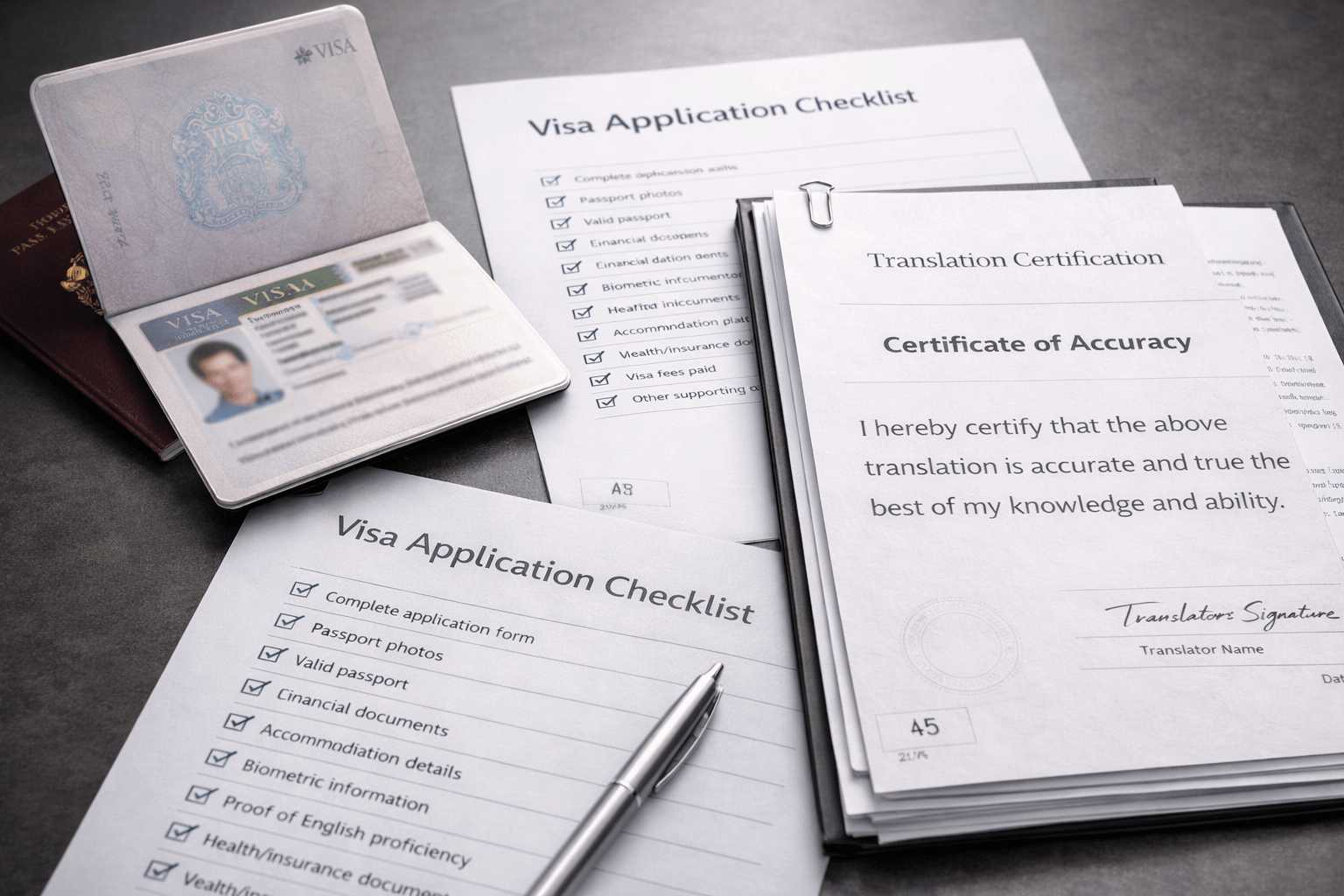
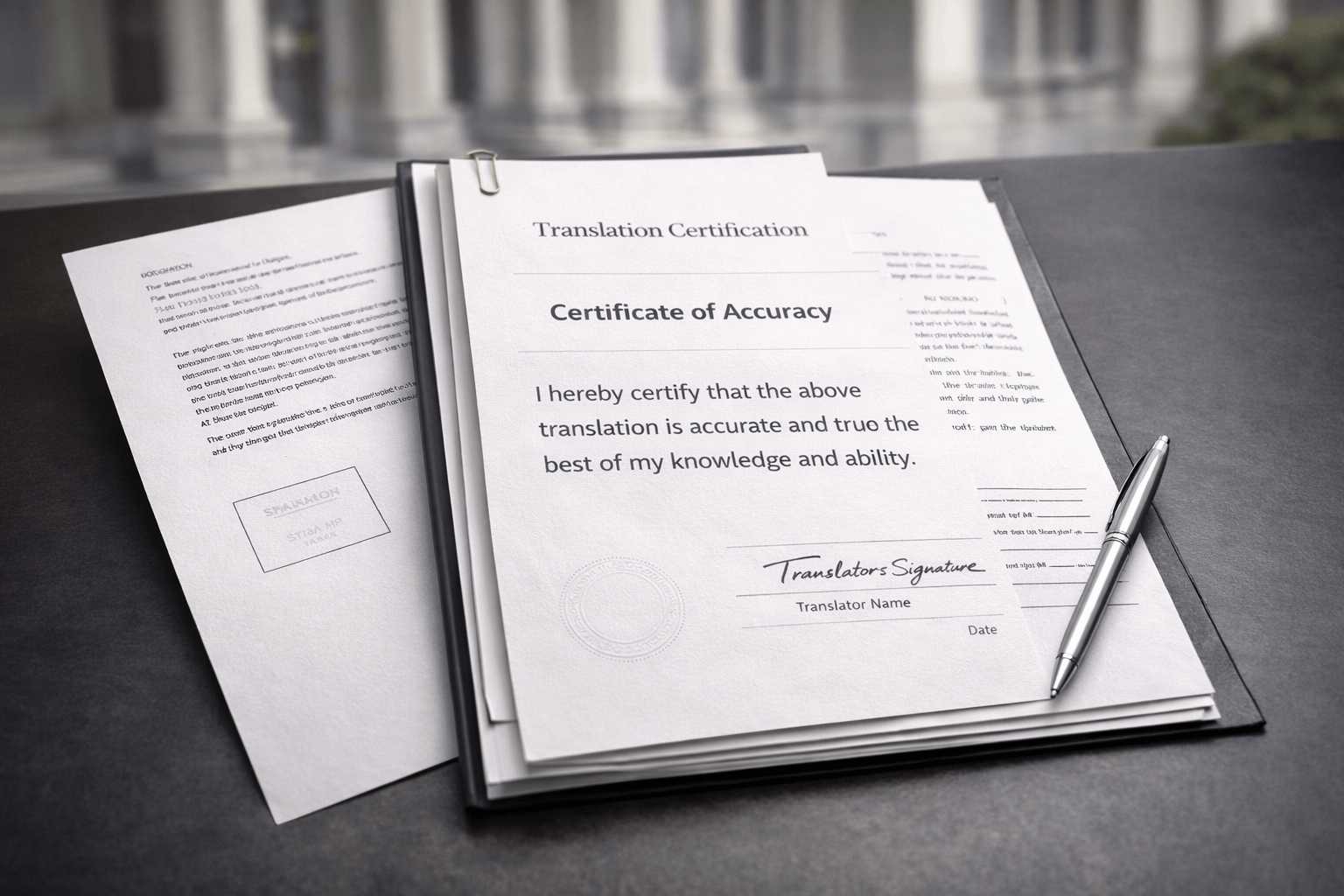
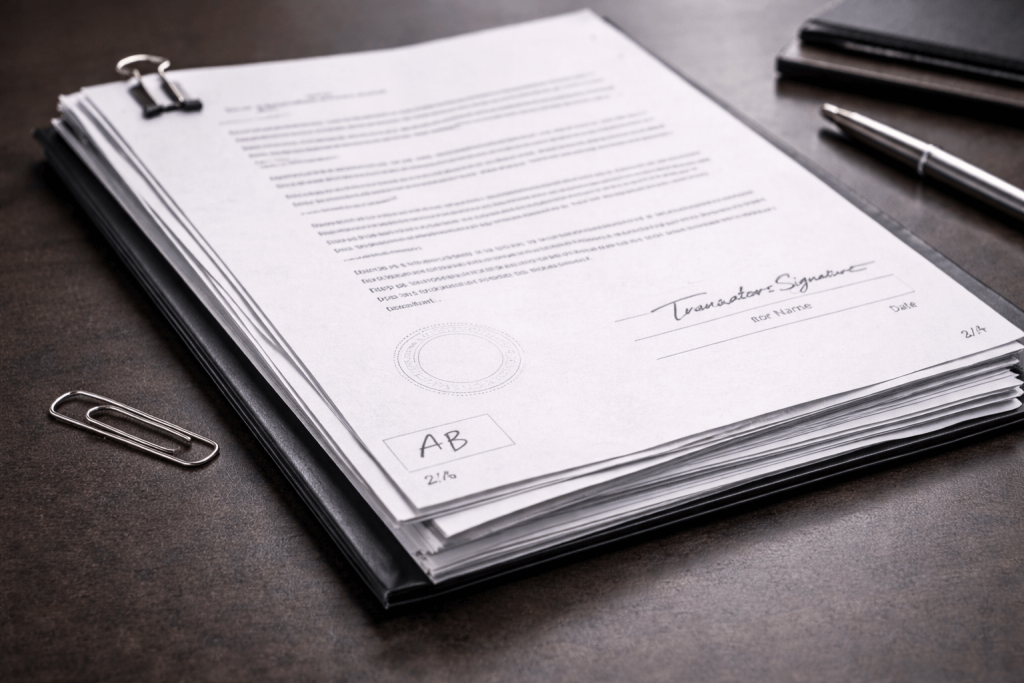
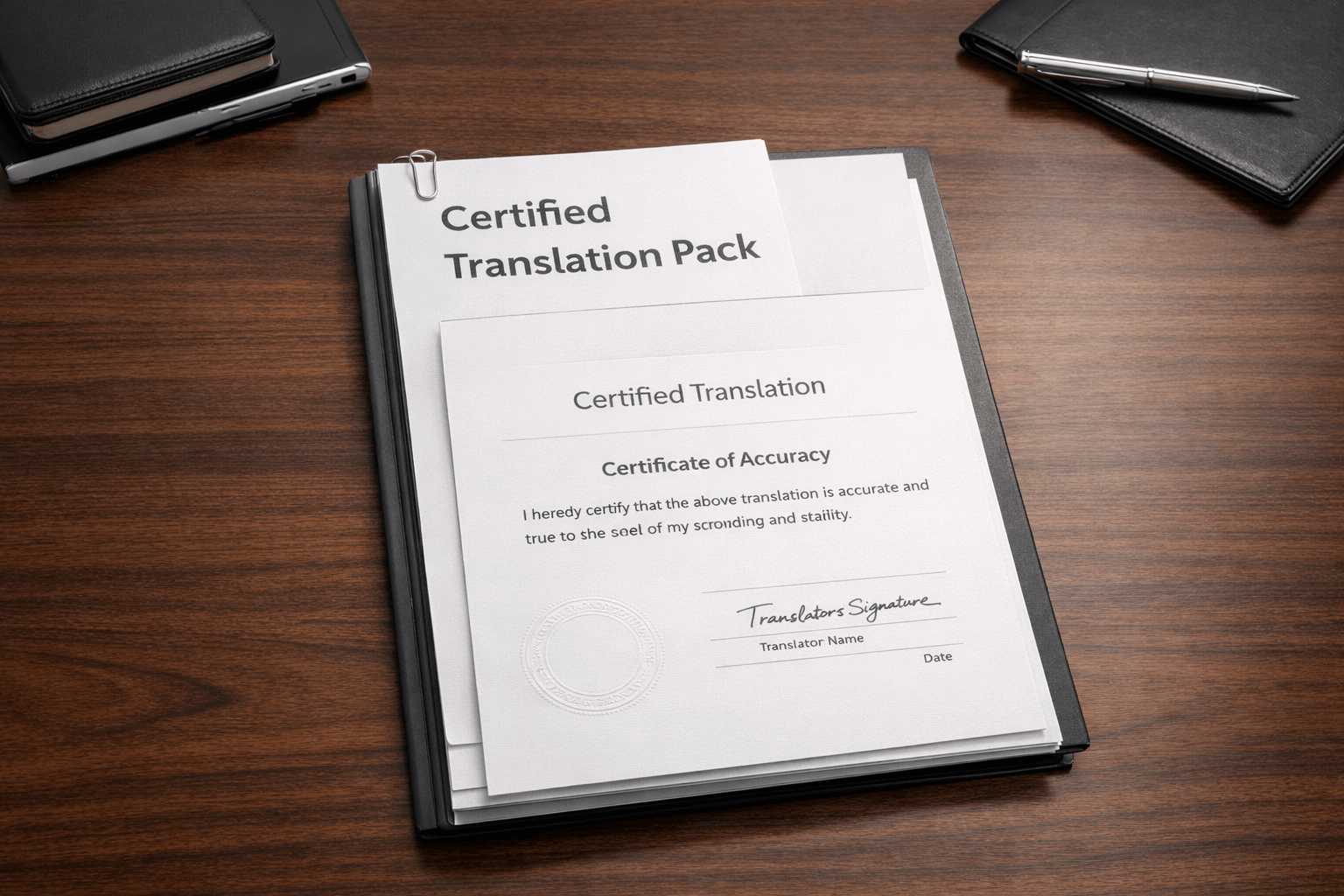
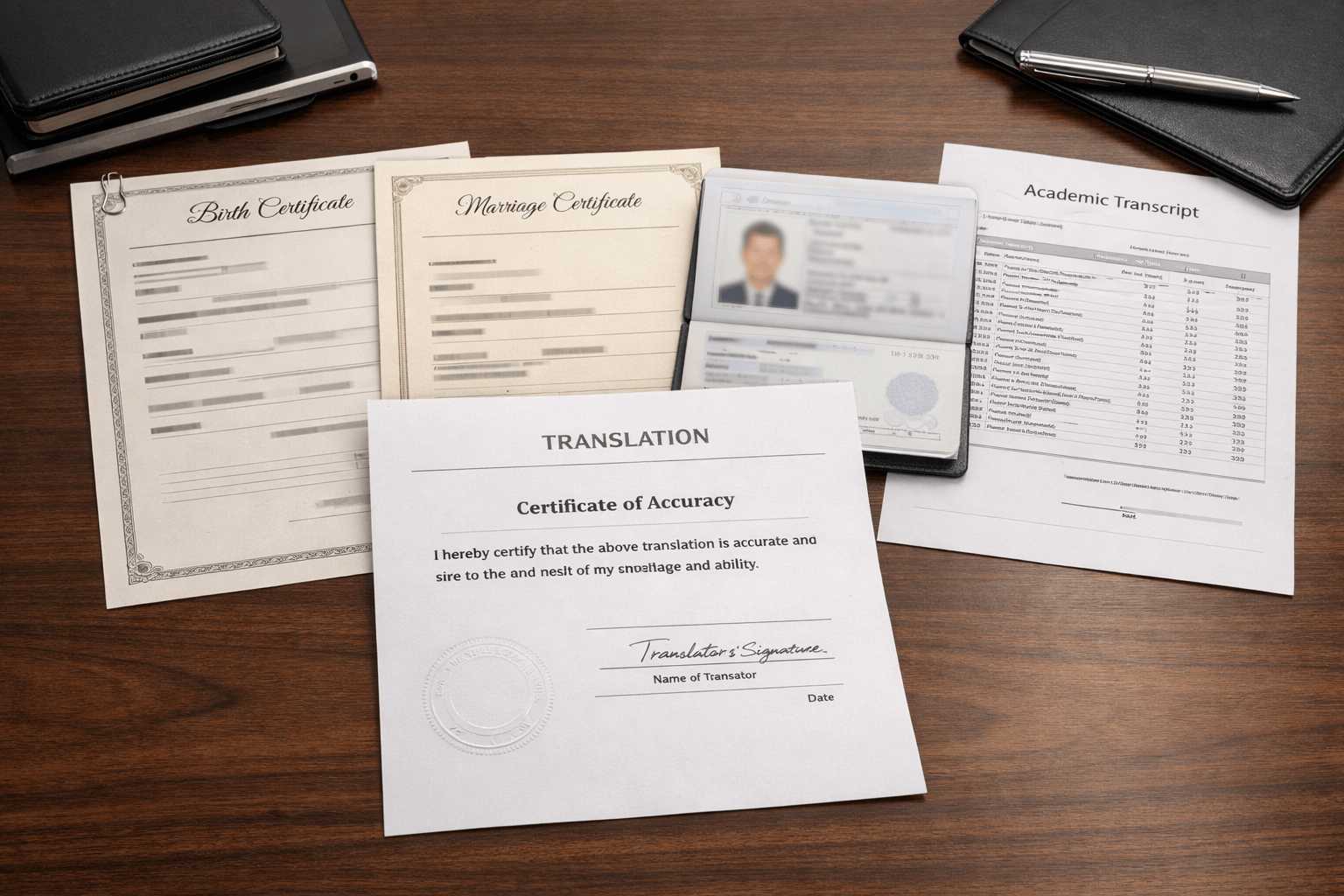
If you’re searching stamped translation immigration because someone told you “just get it stamped,” here’s the truth: immigration offices don’t accept a stamp by itself — they accept a translation that’s properly certified, verifiable, and complete. A stamp can help, but it’s not the deciding factor.
So what actually gets accepted for uk immigration translation, visa applications, residency, settlement, or citizenship?
A translation is usually accepted when it:
is a full translation of the document (including stamps, seals, handwritten notes, and letterheads)
includes a signed certification statement confirming accuracy
contains identifiable translator/agency details so the translation can be verified
matches the original document cleanly (names, dates, document numbers, formatting)
Let’s break it down in plain English and make sure your documents don’t get delayed for avoidable reasons.
What “Stamped Translation” Really Means
A stamped translation typically refers to a translation that has a company stamp/seal applied to the translation and/or the certificate page. Many agencies stamp translations because it looks official and some institutions expect a visible mark.
But “stamped” can be misunderstood. Here are the common terms people mix up:
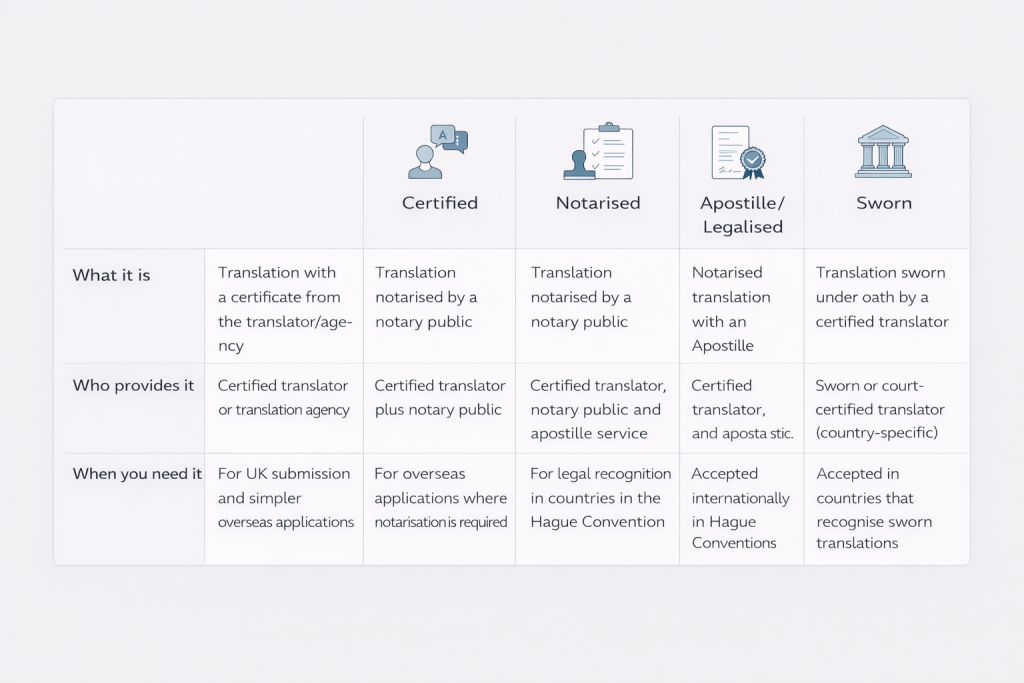
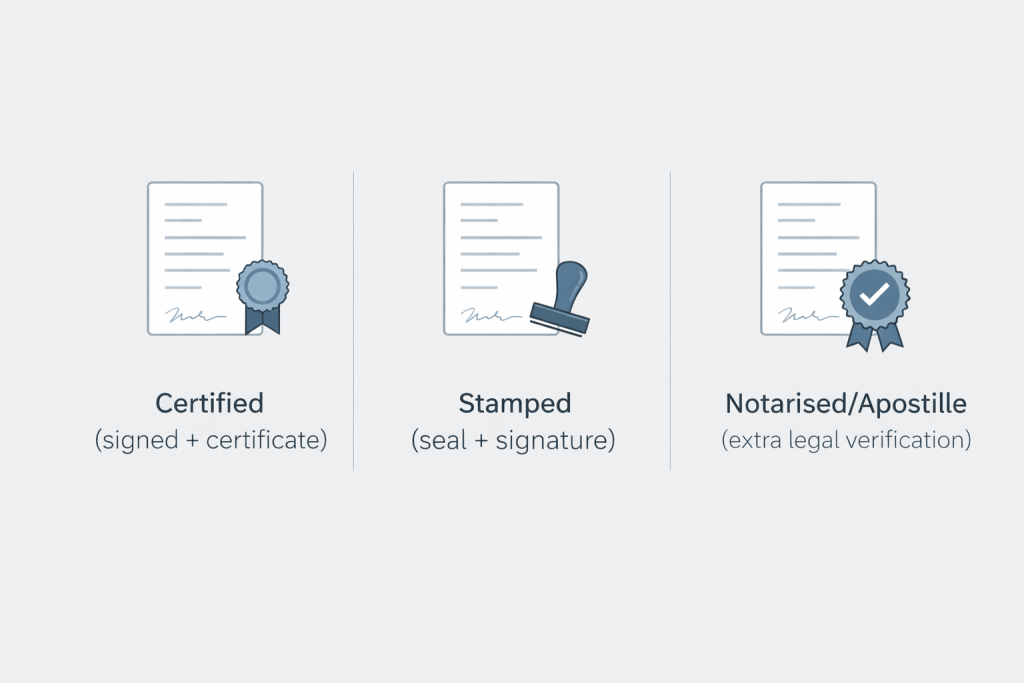
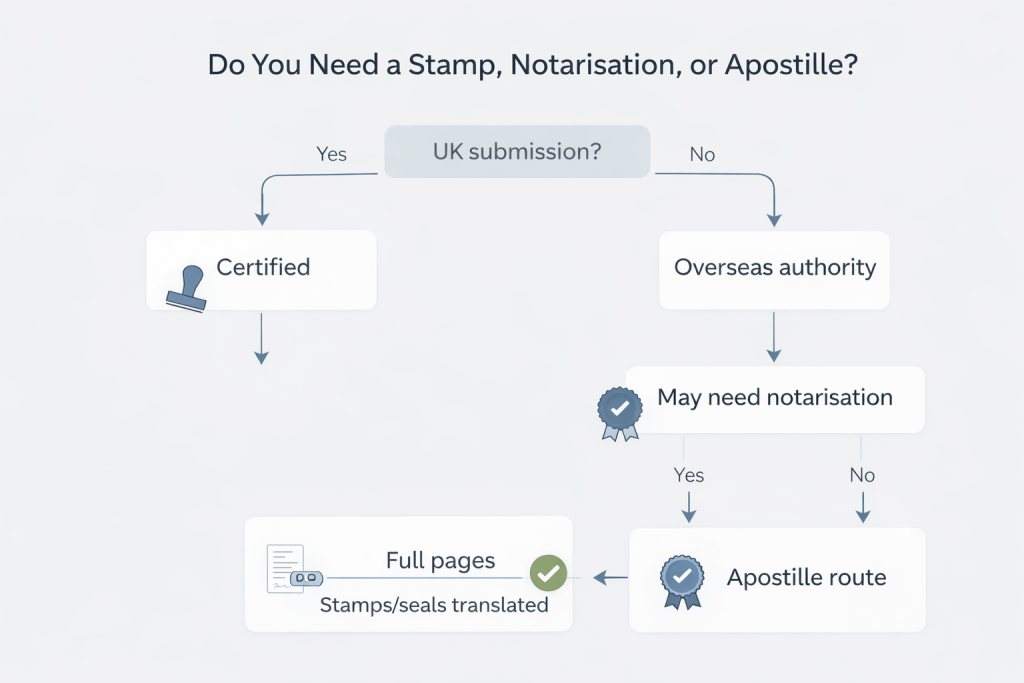
Certified translation (UK): A translation with a Certificate of Accuracy (signed, dated, with contact details). This is the standard for most UK submissions.
Notarised translation: A notary/solicitor verifies the identity/signature of the person signing (not the translation quality).
Apostilled/legalised document: A separate authentication step (often for international use) that verifies a signature/seal on a document.
Sworn translation: Required in some countries where translators are officially appointed/registered to produce “sworn” translations.
If you only remember one line, remember this:
A stamp is a presentation detail. Certification and verifiability are what immigration offices rely on.
What Immigration Officers Are Actually Checking
Most immigration authorities (UK and abroad) are trying to answer three simple questions:
1) Is it complete?
Partial translations are a common reason documents get questioned. Immigration staff want the whole picture — not just the typed text.
This usually includes translating:
stamps and seals
handwritten notes
marginal notes
headers, footers, document titles
registration numbers and issuing authority details
2) Is it accountable (independently verifiable)?
They need to know who is responsible for the translation so they can verify it if needed. A stamp alone doesn’t always identify a person or provide contact details.
3) Does it match the original without raising red flags?
Small inconsistencies create delays:
name spelling changes across documents
date format confusion (DD/MM vs MM/DD)
missing middle names
inconsistent passport/ID numbers
mistranslated civil status terms
UK Immigration: Home Office / UKVI Translation Requirements (What You Must Include)
For uk immigration translation, if your supporting documents are not in English (or Welsh), your translation needs to be independently verifiable and should include:
a statement confirming it is an accurate translation of the original
the date of translation
the translator’s full name and signature
the translator’s (or company’s) contact details
Home Office translation stamp: is it required?
In most cases, a “Home Office translation stamp” is not the rule — it’s simply a common way translation companies visually mark certified work. What matters is that the translation includes the required certification information and can be verified.
Bottom line for UKVI: A stamped translation can be accepted — but only if it’s also properly certified.
If you want a UK-ready format done correctly the first time, use a service built for UK submissions like ourcertified translation services.
Visa Stamped Translation: When a Stamp Does Matter More
People often search visa stamped translation because some embassies and overseas authorities are strict about how translations “look.”
A stamp becomes more important when:
the receiving authority expects an agency seal as part of their standard acceptance process
the document is being used in a country where “official translation” is typically stamped
you’re combining translation with notarisation, apostille, or legalisation steps
If you’re unsure whether you need certified, notarised, apostilled, or sworn output for your destination country, it’s safer to use an agency that can supply the correct level without guesswork. (We also offerdocument notarised translation and can advise on apostille/legalisation routes.)
A Simple Acceptance Checklist (Use This Before You Submit)
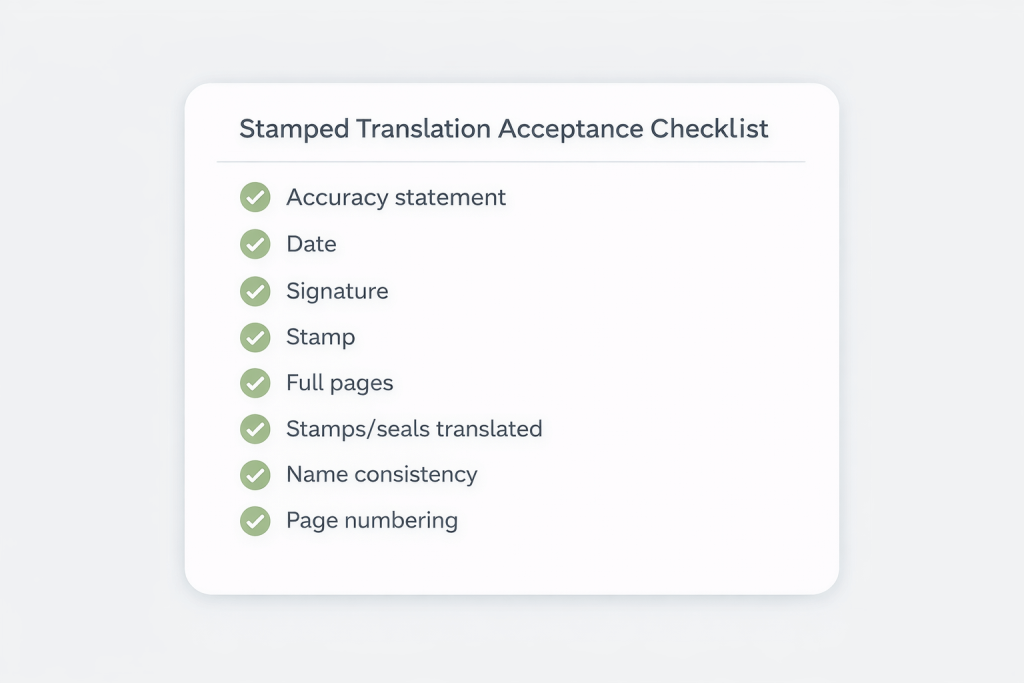
Use this checklist to decide if your stamped translation is likely to be accepted for immigration.
Your translation should have:
✅ A full translation of all visible content (including stamps/seals/handwriting)
✅ A Certificate of Accuracy / certification statement
✅ The translator/agency name clearly shown
✅ Signature (translator or authorised representative)
✅ Date of translation/certification
✅ Contact details for verification (email/phone/address)
✅ Consistent spelling of names across all documents
✅ Correct handling of dates and locations (no format confusion)
✅ A clean layout that mirrors the original structure where practical
✅ The original document included alongside the translation (usually in the same upload pack)
Want a quick sanity-check? Send your file viaContact Us and ask for “immigration-ready certified format” — we’ll confirm what’s needed before you submit.
Why Stamped Translations Still Get Rejected (And How to Prevent It)
Even with a stamp, rejections happen when the translation is missing the things immigration officers actually rely on.
Common issues:
Stamp present, but no certification statement
No signature (or only initials)
No contact details (not verifiable)
Partial translation (stamps/handwriting not translated)
Example: Certificate of Accuracy (Simple, Immigration-Friendly)
A compliant certificate is usually short and clear. Here’s a practical template (wording may vary by country/authority):
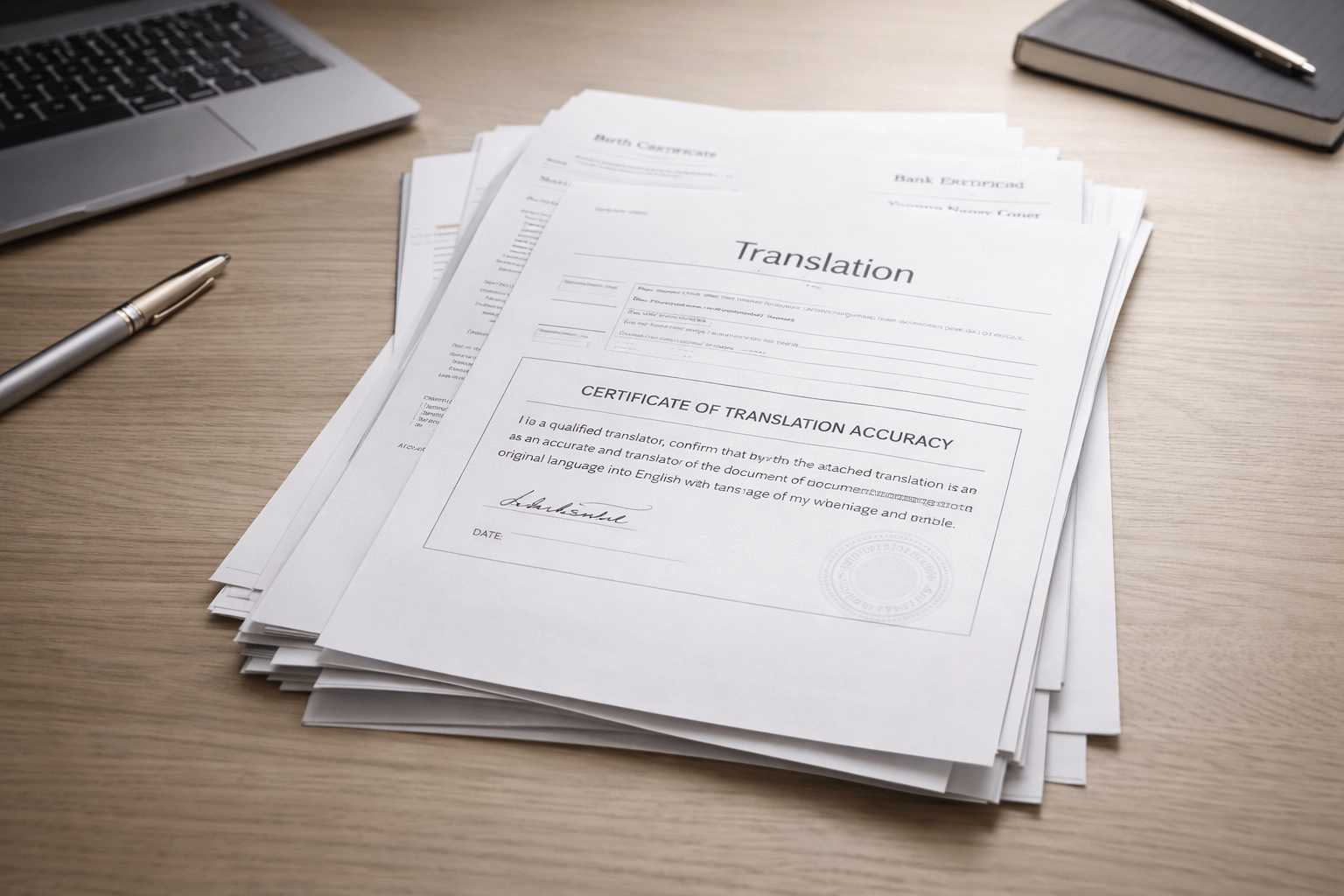
Certificate of Accuracy I certify that I am competent to translate from [Language] to English and that the attached translation is a true and accurate translation of the original document.
This is the part most people mean when they ask for a “stamp” — but the statement + signature + contact details is what makes it verifiable.
How Locate Translate Delivers Immigration-Ready Translations
When you order through Locate Translate, you’re not just getting text converted into English — you’re getting a submission-ready format designed for official checks:
a professionally formatted translation
a signed Certificate of Accuracy
date + company verification details
official stamp/seal where applicable
optional extras if your case needs them (hard copy, notarisation, apostille/legalisation)
“Very professional… really helped put our minds at ease.”
Ready to move? Upload your document here:Contact Us — you’ll get a clear quote and the correct certification level for your destination.
FAQ
Do immigration offices accept stamped translations?
Yes — if the translation is also properly certified with an accuracy statement, signature, date, and verifiable translator/agency contact details. A stamp alone is rarely enough.
Is a Home Office translation stamp required for UK immigration translation?
A home office translation stamp is not usually a standalone requirement. What matters is a certified translation that can be independently verified and includes the required certification details.
What is a visa stamped translation?
A visa stamped translation usually means a certified translation with a visible agency stamp/seal. Some embassies and overseas authorities prefer or require stamped presentation, but certification details still matter most.
Will UKVI accept a digital (PDF) certified translation?
In many cases, yes — provided the translation includes the full certification statement and the original document is provided alongside it in your upload pack.
Do I need notarised translation for UK immigration?
Usually not. Most UK submissions rely on certified translations. Notarisation is typically only needed when a specific receiving authority demands it.
Will USCIS accept a stamped translation for immigration?
USCIS generally focuses on a complete translation plus a signed certification statement. A stamp can be included, but the key is the certification and completeness.
A stamped translation provider is only “valid” if the receiving authority (Home Office, court, university, embassy, bank, registry office) accepts the translation as properly certified. That’s why the same stamp can be accepted in one place and rejected in another.
If you’re trying to avoid delays, the safest approach is simple: match the provider type to the destination requirement—and make sure the translation includes the information that allows independent verification.
2) Notarised translation (when the recipient demands it)
A notary verifies the identity/signature of the translator or agency representative. This can be required for overseas processes, certain legal filings, or some embassies.
An apostille/legalisation route is about authenticating signatures/seals for international acceptance. It often sits on top of certification and sometimes notarisation.
In many civil-law countries, only a sworn translator (court/government authorised) can issue an “official” translation. A UK “sworn translator” is not a standard concept—so if a foreign authority asks for “sworn,” you’ll need the destination country’s sworn translator route, not just a stamp.
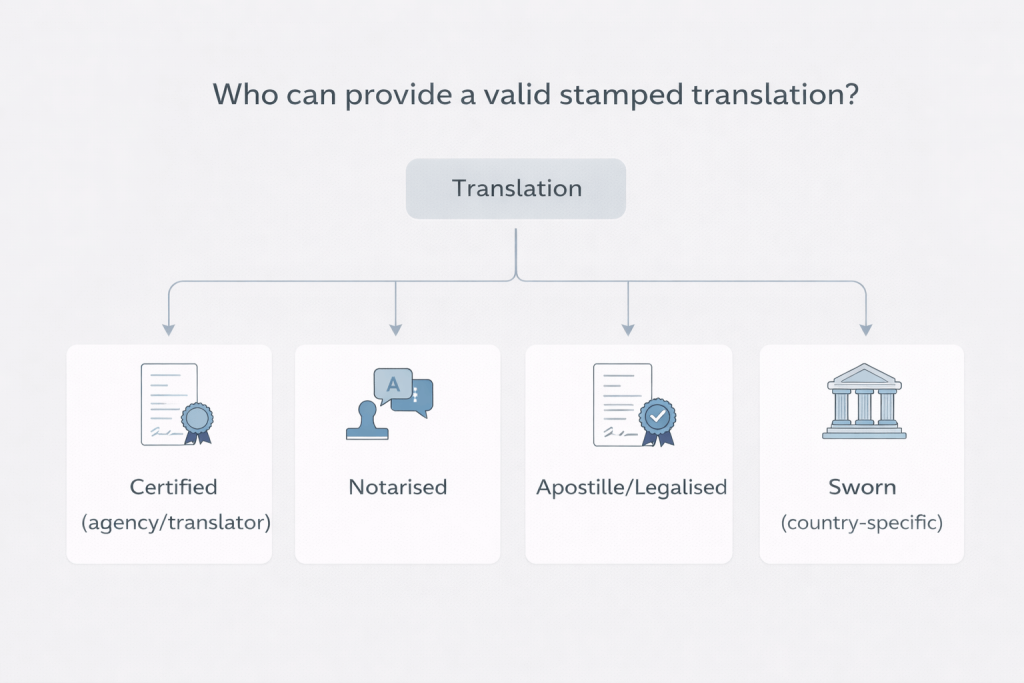
Who can provide a valid stamped translation?
Below are the most common provider types—and when they count as “valid.”
A) Professional translation agencies with certification authority
A reputable translation agency can be a valid stamped translation provider if they issue:
A certificate of accuracy
A signature (translator or authorised representative)
Full provider details (name, address/contact)
Date of certification/translation
A stamp (often included)
When it’s accepted: UK authorities, universities, banks, employers, and most official submissions that request a certified translation.
Best for: Immigration packets, identity documents, academic records, court bundles (when certified is acceptable), and general official use.
B) Qualified individual translators who can certify their own work
A translator can be a valid stamped translation provider when they are:
Properly qualified/experienced in the required language pair
Able to certify the translation with a declaration of accuracy
Willing to include verifiable contact details and signature
When it’s accepted: When the recipient accepts individual certification, not only agency certification.
Note: A stamp alone is not a qualification. A credible certification statement is what makes it accountable.
C) Sworn translators (civil-law jurisdictions)
If you’re submitting documents to a country that requires sworn/official translations, you typically must use:
A translator appointed/registered by a court or government body
The exact format required (often includes sworn wording, registration number, stamp/seal)
When it’s accepted: Where sworn translation is a legal requirement (varies by country and authority).
Common scenario: You’re told “only sworn translator accepted” or “official translator list required.”
D) Notaries, solicitors, and legal offices
This is where many people get caught.
A notary or solicitor stamp usually validates a signature or a copy, not the translation quality—unless the notary is also qualified in that language pair (which is uncommon).
Valid when: The authority demands notarisation/legalisation/apostille steps.
Some countries have regulated “legal translation” systems where only licensed offices can stamp translations for official acceptance (common in parts of the Middle East and elsewhere).
Valid when: Your destination authority names a specific regulator (e.g., ministry-approved providers).
The non-negotiables: what a valid translation must include
If you want to reduce rejection risk, your translation should clearly include:
A statement confirming it is a true and accurate translation
The date of translation/certification
The translator’s full name
A signature
Contact details for verification (email/phone/address or agency contact)
A clear link between source and translation (reference number, page numbering, attached copy, or consistent formatting)
A stamp can strengthen presentation and tamper-resistance—but it’s not the only thing authorities look for.
Does the stamp need to be “official”?
Sometimes yes, often no.
What the recipient usually wants is:
Accountability (who produced it, and how to contact them)
Verifiability (details that can be checked)
Completeness (nothing omitted)
Integrity (pages can’t be swapped or edited unnoticed)
A stamp helps with integrity—but a proper certification statement is the real foundation.
How to choose the right provider in 2 minutes
Step 1: Identify the receiving authority
Ask: “Who is reviewing this?” Examples:
UK visa/immigration
Court submission
University admissions
Embassy/legalisation desk
Bank/compliance team
Step 2: Match the required level
Use this quick rule:
If they say certified translation → certified with a certificate of accuracy (stamp commonly included)
If they say notarised → certified + notary step
If they say apostille/legalised → certified + (often) notarised + legalisation route
If they say sworn/official translator only → destination-country sworn translator
If you’re not sure, send us the request message or requirement screenshot and we’ll match the correct level before you pay. Contact: https://locatetranslate.co.uk/contact-us/
A practical verification checklist (use this before you submit)
Check the provider (30 seconds)
Full legal name shown (translator or company)
Reachable contact details
Clear service scope (certified/notarised/apostille)
Transparent process and turnaround
Check the translation pack (60 seconds)
Certification statement is present
Signature is present
Date is present
Page numbers and document identifiers match the original
Names, dates, and reference numbers match exactly (no “close enough”)
If multiple pages: each page is clearly linked (initials/stamp or consistent page footer/header)
Red flags that cause rejection
Only a stamp—no certification statement
No signature or no verifiable contact details
Missing pages (“summary translation” when full translation is required)
Translating a document type that usually needs full fidelity (birth/marriage certificates, court orders, financial evidence) with loose formatting
Edits or overwrites on scans that make it look altered
What a strong certification statement looks like (example)
A good certification statement is short, clear, and verifiable. It typically includes:
Confirmation it is a true and accurate translation
Source language → target language
Translator/provider name and signature
Contact details
Date
Location (optional but helpful)
If your receiving authority has a strict template, follow it. If they don’t, keep it clean and formal.
Real-world rejection scenarios (and how to avoid them)
Scenario 1: “We can’t verify the translator”
What happened: The translation had a stamp but no contact details. Fix: Include a certification statement with contact information and a signature.
Scenario 2: “Pages don’t appear linked”
What happened: Multi-page translation had no page identifiers; reviewer feared pages could be swapped. Fix: Use consistent page numbering, and stamp/initial each page (or use a sealed certification method).
What happened: The applicant ordered a certified translation; the embassy asked for notarisation. Fix: Confirm whether notarisation/legalisation is required before ordering.
Client feedback often highlights speed and reliability—exactly what matters when you’re working against a deadline.
Frequently asked questions
Who is considered a valid stamped translation provider?
A valid stamped translation provider is a qualified translator or professional translation agency that can issue a verifiable certification statement (signature, date, provider details) and apply an authorised stamp or seal when required.
Is an authorised translator stamp always required?
Not always. Many authorities care more about verifiability (signature, date, contact details, accuracy statement). A stamp can help, but it does not replace proper certification.
Can a notary provide a stamped translation?
A notary can notarise the translator’s signature or certify copies, but they typically do not verify translation accuracy unless they are also qualified in the language pair. Notarisation is only necessary when the recipient explicitly requests it.
Will a translation agency stamp be accepted for immigration applications?
Often, yes—if the translation includes a certificate of accuracy, date, signature, and contact details. Immigration requirements usually focus on independent verification rather than the stamp design.
What’s the difference between a certified translation and a stamped translation?
“Stamped translation” is informal wording. In practice, you usually need a certified translation (accuracy statement + identity details). A stamp is commonly added as a presentation and integrity feature.
How do I avoid my certified translation being rejected?
Use a provider that includes a full certification statement, signature, date, and contact details; ensure names and numbers match the original exactly; and make sure multi-page documents are clearly linked with page numbering and consistent formatting.
If you’ve been told you need a “stamped translation,” you’re not alone—and you’re not overthinking it. In most cases, “stamped translation” is simply how people describe an official, certified translation that comes with a statement of accuracy, signature, date, and a professional stamp/seal so it’s accepted for immigration, education, legal, and official use.
This guide answers the real questions people ask (and the ones authorities quietly reject documents for), so you can submit once and move on.
What people mean by a “stamped translation”
A “stamped translation” usually refers to a translated document that includes visible proof it’s been prepared for official submission—typically:
A certification statement (sometimes called a statement of truth / certificate of accuracy)
A signature (translator or authorised agency representative)
A date
Contact details (so the translation can be verified)
A stamp/seal (ink stamp or secure digital stamp)
Often: page numbering, initials, and a bound “translation pack” format
Different organisations use different wording (“certified,” “official,” “attested,” “notarised,” “sworn,” “legalised”), but they’re not the same thing. The next sections make it simple.
Translation stamp meaning (and what a stamp does not mean)
A translation stamp is a professional marker that helps the receiving organisation identify the translation as an official submission-ready document.
What a translation stamp usually means:
The translation is issued by a professional translator/agency
The translation is paired with a certification statement
The issuer can be contacted to verify the work
The document is less likely to be altered without detection
What a stamp does not automatically mean:
That a notary has verified it
That an apostille has been attached
That it meets every country’s specific legal definition of “sworn” or “legal translator”
Think of a stamp as a signal, not the whole solution. Official acceptance comes from the full certification package, not ink alone.
Is stamped translation certified?
Sometimes—often—yes. But the safer answer is:
A translation is “certified” when it includes a proper certification statement and the issuer’s signature, date, and contact details. A stamp is commonly included, but the certification statement is the core.
So if someone asks, “Is stamped translation certified?” here’s the practical takeaway:
Stamped + certification statement + signature + contact details = typically a certified translation
Stamp only (no statement, no signature, no contact details) = often not enough
If the receiving authority is strict (immigration, courts, regulated bodies), “stamp only” is one of the fastest ways to get delayed.
Stamped vs certified vs notarised vs sworn vs apostilled
Here’s the simplest way to choose the right service.
Certified translation (most common for UK official use)
The acceptance checklist: what a stamped translation should include
If you want the “submit once and get accepted” version, check your translation pack includes:
Full translation (complete—not summaries)
Certification statement confirming accuracy
Date of certification/translation
Name + signature (translator or authorised agency representative)
Contact details (email/phone/address or equivalent)
Stamp/seal (ink or secure digital stamp)
Consistent names/dates matching the source document
Stamps/annotations on the original are handled properly (often translated as notes)
Clear formatting so the source and translation can be compared
Multi-page security (page numbers/initials/binding—especially for official submissions)
If you’re unsure, the fastest path is to upload the file and ask for an acceptance-ready format upfront:Contact Locate Translate.
Digital stamp vs ink stamp: which one is better?
In 2026, many organisations accept secure digital certification (PDF with a stamp/seal and signature). Some still insist on wet ink or a printed pack.
Digital certification is usually ideal when:
You’re submitting online (visa portals, university admissions)
You need speed
You want a clean “one PDF pack” submission
Wet ink / printed pack may be better when:
A receiving office explicitly requests original signatures
You’re presenting documents in person
The process involves legalisation steps that require physical handling
If the requirement is unclear, don’t guess—ask a single question:
“Do you accept digitally certified translations, or do you require a stamped hard copy?”
That one sentence prevents most resubmissions.
Common reasons stamped translations get rejected (and how to avoid them)
Rejections are rarely about vocabulary. They’re usually about missing verification details or mismatches.
Top rejection triggers:
No certification statement (or it’s too vague)
No contact details for verification
Missing date or signature
Names don’t match the source document (spelling, order, transliteration inconsistency)
Stamps/seals on the original are ignored instead of noted/translated
The translation isn’t complete (missing back pages, notes, marginal text)
Pages look editable or unbound in a way that raises tampering concerns
How to avoid it:
Treat “stamped translation” as a compliance deliverable, not just a translation
Provide clean scans showing full page edges
Tell the translator what the document is for (visa, court, university, overseas use)
Ask for an “official submission-ready certified translation pack”
For legal/official documents, this overview helps clarify what “official-ready” really means:what is legal translation?
Quick decision guide: which service do you actually need?
Use this simple rule set:
If your document is for UK immigration / passports / universities / general UK official use → start with certified translation
If the receiving authority says “must be notarised” → notarised translation
If a specific country says “sworn translator required” → sworn translation
If the document must be recognised abroad and they ask for legalisation → apostille/legalisation (sometimes alongside the translation)
When your documents are for overseas authorities (especially where embassy/legalisation steps apply), this guide is a strong starting point:apostille translation guide.
A realistic example: why “stamp-only” creates delays
A typical scenario looks like this:
Applicant translates a document (or uses a cheap “stamp-only” service)
Submission is flagged because the translation cannot be independently verified
Applicant is asked to resubmit with a proper certification statement and contact details
Timeline slips (appointments, enrolments, visa processing windows)
The fix is simple—but only if it’s done first time: a complete certified translation pack with verification details, plus the right format (digital or hard copy) depending on the destination.
Getting a stamped translation in the UK with Locate Translate
If you want an official-ready outcome without guessing:
Upload a clear scan/photo of your document (all pages, including back sides and stamps)
Tell us where it’s being submitted (UKVI/Home Office, university, court, overseas authority)
Choose delivery format: secure PDF, hard copy, or both
Receive a certified translation pack prepared for official acceptance
What clients notice most (and why it matters for official submissions)
When documents are time-sensitive, people care about three things:
Clarity (easy for an officer/admissions team to review)
Consistency (names/dates match perfectly)
Confidence (verification details are present, format looks official)
Locate Translate is built around those three outcomes—so your documents don’t just read well, they get accepted.
Frequently Asked Questions
Stamped translation FAQ: what is a stamped translation?
A stamped translation is a translation issued with official-looking verification elements—typically a certification statement, signature, date, contact details, and a stamp/seal—so it can be accepted for official use.
Is stamped translation certified or do I still need certified translation?
Stamped translation is often certified if it includes a proper certification statement and verification details. A stamp alone doesn’t guarantee certification—authorities usually require a signed statement, date, and contact details.
Translation stamp meaning: why do translations get stamped?
A translation stamp helps show the translation is an official submission-ready document and supports verification. It also discourages tampering by marking each page or the certification pack clearly.
Do I need a notarised translation if I already have a stamped translation?
Not always. Notarisation is a separate step and is only needed when the receiving organisation explicitly requests it. If the requirement says “notarised,” a standard certified stamped translation may not be enough.
Can stamped translations be delivered as a PDF?
Often yes. Many organisations accept digitally certified PDFs with a stamp/seal and signature. Some processes still require wet ink or hard copy—always follow the receiving authority’s instruction.
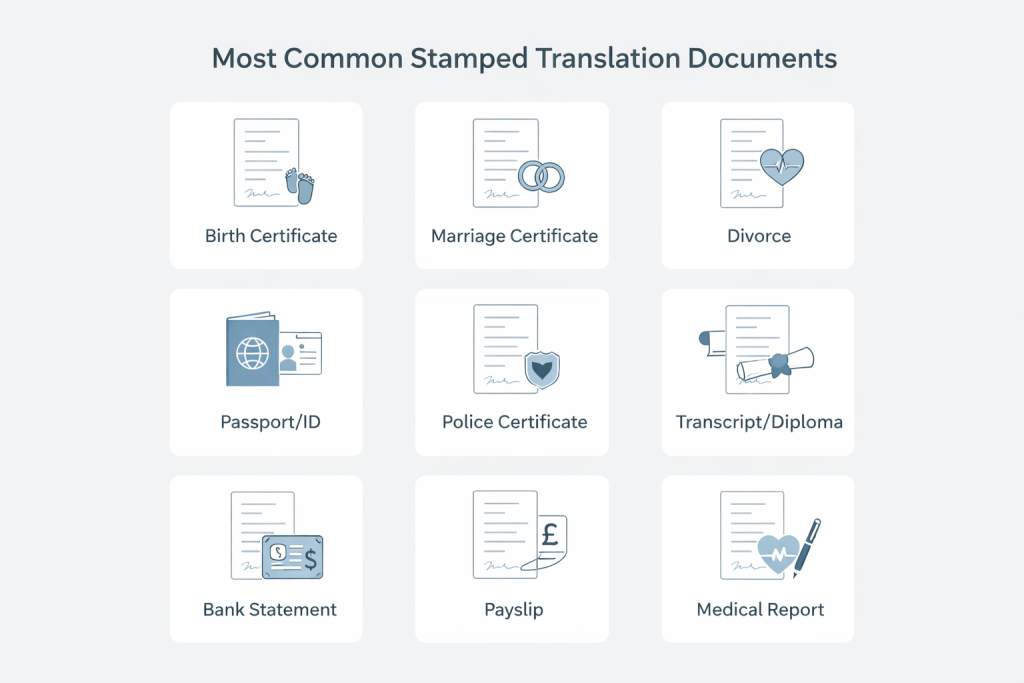
What documents most commonly need a stamped/certified translation?
Birth and marriage certificates, passports/IDs, visa and immigration documents, academic transcripts, court documents, and business/legal paperwork are common examples.
If you’re searching for stamped translation documents, you’re usually in one of two situations:
An authority has asked you for an official translation with a stamp/signature/certificate of accuracy, and you don’t want it rejected.
You’re unsure which papers actually need a translation stamp (and which need something stronger, like notarisation or an apostille).
This guide gives you a practical, document-by-document list—plus the exact “why,” the common rejection reasons, and how to choose the right level of certification the first time.
Need it quickly? Locate Translate provides signed & stamped PDF translations accepted by UK authorities—with typical turnaround in 24–48 hours and pricing from £25 per page. Get a quote in minutes here: Legal translation quote form
What “Stamped Translation” Usually Means
A “stamped translation” isn’t one universal standard. Different organisations use the term differently, but in day-to-day reality it usually means:
A professional translation accompanied by one or more of the following:
A Certificate of Accuracy (sometimes called a certification statement)
A signature (translator or agency representative)
A stamp/seal (often an agency stamp; sometimes a professional body seal)
A format that prevents tampering (page numbering, initialling, secure PDF)
In the UK, most official submissions don’t require a government-issued stamp—they require a certified translation that clearly shows who translated it, when, and a declaration that it’s accurate. Many agencies add a stamp as a trust and anti-tamper feature.
If you’re not sure which level you need, start here:
Searches for marriage certificate translation stamp are extremely common because marriage documents are frequently checked for authenticity and consistency across applications.
Common uses:
Spouse/partner visas
Name change processes
Home Office/UKVI submissions
Overseas registration or consular processes
What usually causes rejection:
Mismatch between certificate names and passport names
Missing registry numbers or issuing office details
These documents can be required in immigration and compliance contexts, and they often need consistent formatting and a clear certification statement.
Payslips
Common uses:
Spouse visa financial requirement evidence
Mortgage applications
Employer checks
Common rejection reasons:
Not translating employer name/address accurately
Currency amounts misread (commas vs decimals)
Missing deductions/tax labels (which matter in assessment)
Bank Statements
Common uses:
Visa applications
Proof of funds
Student applications
Tip: Banks and immigration reviewers can be strict about formatting. A clean layout that mirrors the original helps prevent questions.
Employment Letters / Contracts
Common uses:
Visa files
HR onboarding
Relocation packages
Important: Some legal/employment documents may require notarisation depending on where they’re being submitted. If you’re unsure, it’s safer to ask for the requirement upfront—or choose a provider that can upgrade certification if needed. Related: Notarised translation services
Legal documents can require a stamp, but many authorities want more than a basic stamp—especially if the document is being used internationally.
Common legal documents that frequently require certified or notarised translation:
Court orders / judgments
Affidavits and statutory declarations
Powers of attorney
Solicitor letters
Contracts and agreements
Litigation bundles (multi-document packs)
Common rejection reasons:
Partial translation (missing annexes/appendices)
Not translating court seals, case numbers, or headings
Inconsistent terminology across documents
If the receiving authority says “legalised,” “apostilled,” or “consular,” you may be looking at an additional step beyond stamping. Helpful reading: What is an apostille? and Apostille translation guide
Medical Documents (Accuracy Matters More Than Format)
Medical documents often require a certified translation (and people frequently call it “stamped”) because the consequence of ambiguity is high.
Common medical documents:
Medical reports and diagnoses
Vaccination records
Prescriptions (especially for long-term treatment)
Disability assessments
Hospital discharge summaries
Lab results
Common rejection reasons:
Medication dosage units mistranslated
Dates and timelines unclear
Abbreviations expanded incorrectly
Practical tip: Ask the translator to keep original medical abbreviations and provide a clear translation in brackets when appropriate.
Business & Corporate Documents (Often Used Abroad)
If you’re submitting corporate paperwork internationally, the translation often needs certification—and may need legalisation depending on destination.
Common corporate documents:
Certificate of incorporation
Articles of association
Shareholder resolutions
Board minutes
Company registers
Certificates of good standing
Commercial contracts
Invoices and supplier agreements (when used for legal/tax matters)
International note: When documents are crossing borders, the question becomes: Who needs to trust this document? That determines whether you need a stamp, notarisation, or apostille.
Property & Housing Documents
These documents are common in relocation, residency, and legal disputes.
These are frequently needed for DVLA-related processes or international driving recognition.
Common documents:
Driving licences
Vehicle registration documents
Insurance no-claims letters
Transport authority letters
Common rejection reasons:
Not translating licence categories correctly
Address formats mismatching the source
Issuing authority misidentified
When a “Translation Stamp” Is Not Enough (And What to Do Instead)
Some requests sound like “Please provide a stamped translation,” but what they actually mean is:
Notarised translation
Usually required when a notary needs to witness the translator’s declaration (often for international use or specific legal submissions). Service page: Notarised translation services
Stamped translation documents are official translations that include a certification statement plus verification elements like a signature and/or stamp, designed for acceptance by authorities, universities, banks, and legal bodies.
Do I need a birth certificate stamped translation for the UK?
If your birth certificate is not in English and it’s being submitted to a UK authority (e.g., UKVI, passport, DVLA, university), you typically need a certified translation. Many people refer to this as a birth certificate stamped translation.
Is a marriage certificate translation stamp required for UKVI?
UKVI generally expects a certified translation that clearly states it is accurate, includes the translator/agency details and date, and is properly certified. A stamp is commonly included by agencies and can help with clarity and acceptance, but the key is the certification statement and traceability of the provider.
Which documents most commonly get rejected without a proper stamp/certification?
The most common rejects involve certificates (birth/marriage/divorce), police clearance certificates, and academic transcripts—usually due to missing stamps/seals translation, incomplete pages, or inconsistent name spellings.
Do I need notarisation or is a stamp enough?
If the receiving authority says “notarised,” “sworn,” “legalised,” or “apostilled,” a basic stamp may not be sufficient. In those cases you may need notarisation and/or apostille depending on destination and purpose.
Can I submit a stamped translation digitally, or do I need a hard copy?
Many organisations accept signed and stamped PDFs, especially for online applications. Some institutions still request a wet-ink signed hard copy. If you tell us the receiving authority, we can prepare the format that fits.
If you’re Googling stamped translation cost, you’re probably on a deadline. A visa portal is asking for “certified translation,” a university wants a “stamped copy,” or an employer needs “official translations” yesterday.
Here’s the reality: there isn’t one fixed translation stamp price—because the “stamp” can mean different things depending on where you’re submitting the document. In the UK, a stamped translation usually means a certified translation with a signed certificate of accuracy and an official agency stamp. For some countries or special cases, you may also need a notary stamp or an apostille.
This guide gives you clear, practical price expectations, explains the different “stamp” types, and shows how to get the right level of certification without overpaying.
If you want the fastest answer for your exact document and destination, upload your file onLocate Translate or message our team viaContact Us—you’ll get a clear quote and turnaround options.
What “Stamped Translation” Means (And Why It Changes the Price)
People use “stamped translation” as a catch-all phrase, but there are four common meanings:
1) Certified translation (UK) — signed + stamped
This is the most common meaning in the UK. You receive:
A full translation
A certificate/statement of accuracy (signed)
Agency stamp/seal and contact details (for verification)
This is what many UK authorities and institutions typically want when they say “stamped translation.”
A notary public notarises the translator’s declaration/certificate (or a related statement). Some embassies, overseas authorities, and legal processes ask for notarisation.
An apostille confirms the authenticity of a signature/seal on a document (often used for international use). This is separate from translation and usually applies to:
The original document, a solicitor-certified copy, or
A notarised declaration (depending on the destination’s rules)
Some countries require a sworn translation produced by a translator officially authorised in that jurisdiction (Spain, Germany, France, and others). This is different from UK certified translations.
If the receiving authority is outside the UK and specifically says “sworn,” start here:Sworn Translation Services.
Typical Stamped Translation Cost in the UK (Quick Price Expectations)
Most UK “stamped translation” requests fall into certified translation pricing.
As a real-world anchor point, Locate Translate’s certified translations typically start from £25 per page (depending on language, word count, and requirements). For a direct benchmark and how quotes are calculated, see:Certified Translation Price.
Beyond that starting point, prices usually move based on document type:
Common price ranges (UK market expectations)
Personal documents (certificates, IDs): often priced per page
Business, legal, academic packs: commonly priced per word (due to density and complexity)
Add-ons (notary/apostille, courier, rush): priced as extras depending on requirement
The best way to avoid overspending: match the certification level to the destination’s rules. Paying for notarisation (or apostille) when you only need a standard certified translation is one of the most common cost mistakes.
If you’re not sure what your submission requires, send the destination country + authority name viaContact Us and we’ll confirm the correct format before you pay.
A Simple Cost Estimator You Can Use in 60 Seconds
Use this quick estimator to predict your stamped translation cost before requesting a quote:
What are you translating?
1-page certificate (birth/marriage/death)
Multi-page statement (bank/medical/academic)
Contract/business filing
How will it be priced?
Certificates: typically per page
Dense documents: typically per word
What “stamp” level is required?
Certified (signed + stamped)
Notarised (notary stamp)
Apostille/legalisation (apostille attached)
Sworn translation (foreign requirement)
How fast do you need it?
Standard (often 1–3 working days)
Same-day/urgent options may apply depending on language and volume
Delivery format
Digital signed & stamped PDF
Hard copy posted (tracked delivery may add cost)
If you’d rather skip the guesswork: upload the file onLocate Translate and you’ll receive a clear breakdown of cost, turnaround, and any certification add-ons.
What Affects Translation Stamp Price the Most?
Here are the variables that change certified translation pricing (and why):
Document length (pages or word count)
A one-page birth certificate is fast to scope and typically priced as a unit. A 12-page bank statement is heavy on numbers, formatting, and consistency checks—often priced by word count or page density.
A clean certificate is simple. A document with tables, stamps, handwritten notes, or multi-column formatting takes more time to reproduce professionally.
Turnaround time
Rush delivery can increase cost because it changes scheduling and review capacity.
Additional certification layers
This is where “stamped translation cost” can jump:
Notarisation adds a legal step and appointment workflow
Apostille/legalisation adds government processing and courier/post requirements
Sworn translation may require a translator authorised in a specific country
Certified vs Notarised vs Apostilled: Which One Do You Need?
Most people don’t need all three. The goal is acceptance the first time with the lowest necessary certification level.
If the authority’s email or checklist is vague, forward it toContact Us and we’ll tell you exactly which level you need—so you don’t pay for the wrong stamp.
What’s Included in a Professional “Stamped” Certified Translation?
When you pay for certified translation pricing, you’re not paying for ink. You’re paying for a package designed to be verifiable and accepted.
A proper certified translation typically includes:
accurate translation (complete—every name, date, note, stamp, and printed text)
Or message your destination requirements viaContact Us
You’ll receive a clear quote based on word count, language, turnaround, and whether you need certified, notarised, apostilled, or sworn format—so you pay for the right “stamp” once, and submit with confidence.
Frequently Asked Questions
How much is a translation stamp price in the UK?
A “translation stamp price” in the UK usually refers to a certified translation that includes a signed certificate of accuracy and an official stamp. Cost depends on language, document length, and urgency. For a baseline, seeCertified Translation Price and request a quote for exact pricing.
Is a stamped translation the same as a certified translation?
In most UK contexts, yes. “Stamped translation” commonly means a certified translation with a signed statement of accuracy plus a stamp/seal. Some authorities, however, may require notarised or apostilled documents—those are additional steps.
Why does stamped translation cost more for legal or financial documents?
Legal and financial documents are higher-risk and typically denser, requiring stricter terminology control, careful consistency checks, and layout handling (tables, figures, references). These are often priced per word rather than per page.
Do I need notarisation for UK visa submissions?
In many cases, UK submissions only require a certified translation (signed and verifiable). Notarisation is usually only needed when the requesting authority explicitly demands it. If your checklist is unclear, share it viaContact Us and we’ll confirm the correct format.
How fast can I get a signed and stamped translation?
Turnaround depends on language and workload, but many common certified translations can be delivered quickly (including urgent options). The fastest way to confirm timing is to upload your document onLocate Translate.
What’s the difference between sworn translation and certified translation pricing?
A sworn translation is produced by a translator officially appointed/authorised in a specific country (common in parts of Europe). A UK certified translation is typically a signed certificate of accuracy by a qualified translator or agency. Sworn translation pricing can differ because it depends on jurisdiction-specific requirements.